
Why a PCB Assembly Works as a Prototype but Fails in Production
Buyer Guides · 25 November 2026
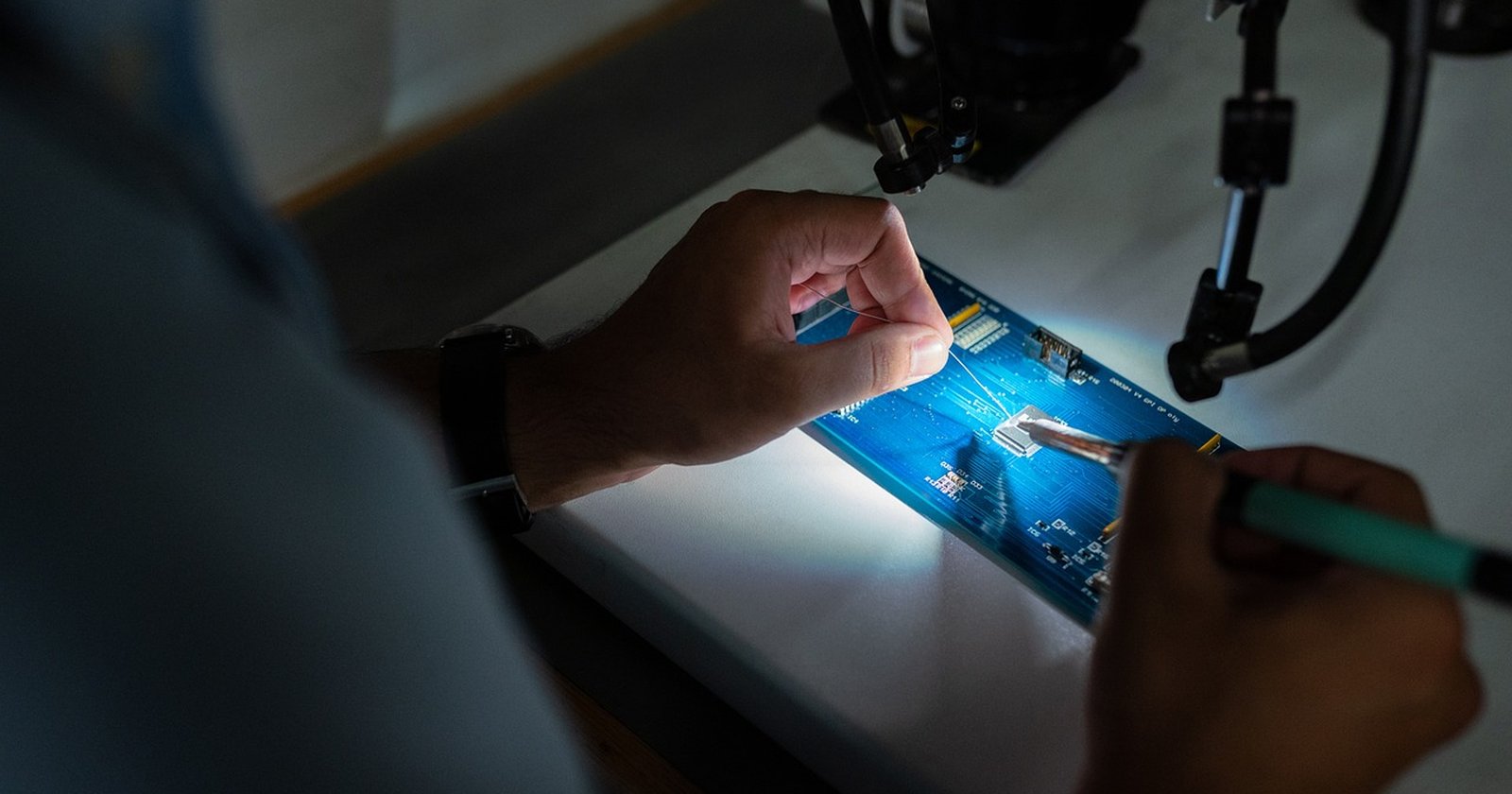
The prototypes arrived, the firmware ran and the product passed its tests on the bench. Then the first production batch came back with a yield problem: joints that fail inspection, a part that can't be bought in volume, or assemblies that pass test in the factory and fail in the field. Usually the design is the same in both builds and the process is different. A prototype is built in small numbers, often with extra attention from skilled operators and engineers on hand to fix problems as they appear. Production has to get the same result from a repeatable process, batch after batch. This guide covers the questions to ask your electronics assembler before you scale up, so problems show up on the prototype build instead of the production one.
Why prototypes hide problems
A prototype build shows that the design can work. Whether it can be built the same way a thousand times is a separate question. Prototypes are often assembled with parts bought from whatever distributor stock is available, with hand adjustments the drawing doesn't mention, and tested by the designer who knows exactly what to look for. Each of those is a gap between the prototype and production.
The way to close those gaps is to treat the prototype build as a trial of the production process. Ask the assembler to build it the way they would build the volume order, and to tell you what they would change before you commit.
Design for manufacture and test
Ask for a design for manufacture (DFM) review before the prototype build, and again before release to production. A good review looks at:
- Component spacing and orientation: parts too close together for the placement machine, inspection camera or rework tool to reach
- Land patterns: pads sized for reliable joints on the packages you have chosen
- Thermal balance: large copper areas next to small parts, which can cause uneven heating in reflow
- Through-hole parts on a mainly surface-mount design: these may need selective soldering or hand soldering, adding a step and a cost
- Parts near the PCB edge: at risk of stress when assemblies are separated from the panel
IPC design standards define producibility levels A, B and C, which describe how difficult a feature is to manufacture, with cost rising from A to C. Asking which level a design needs helps you see where it relies on tight tolerances that a prototype can absorb and a production run may not.
Design for test (DFT) matters just as much. If the PCB has no test points, the assembler cannot reach the circuit with in-circuit test probes, and faults found later cost more to trace. Ask the assembler where they would want test access before the layout is frozen.
Components: availability, alternates and handling
A part bought for ten prototypes may be on allocation, near end of life or only sold in reel quantities when you need five thousand. Before production, ask the assembler to check the bill of materials (BOM) for:
- Lifecycle status and lead time on every line
- Approved alternates you are happy to accept, listed against each line, so the build is not held up waiting for one manufacturer's part
- Single-source parts, and what the plan is if one is unavailable
- Packaging suited to automated placement, such as reels rather than cut tape or loose parts
Moisture-sensitive parts need controlled storage and handling, covered by IPC J-STD-033, because moisture absorbed by a package can damage it in reflow. Ask how the assembler tracks exposure time once a sealed bag is opened. If you are deciding who buys the parts, our guide to turnkey, consigned and hybrid sourcing explains the options.
Stencil, paste and reflow profile
The stencil controls how much solder paste lands on each pad, and too much or too little paste shows up later as a faulty joint. A stencil cut for a prototype may not suit fine-pitch parts and large connectors on the same PCB. IPC-7525 gives guidelines for stencil design, and IPC-7527 sets requirements for solder paste printing. Ask whether the assembler inspects paste deposits with solder paste inspection (SPI) before placement, because a print fault caught there is cheaper to fix than a joint fault found after reflow.
The reflow profile is the temperature curve each assembly follows through the oven. It has to suit the paste, the heaviest and lightest parts and the PCB's copper. IPC-7530, now at revision B, gives guidelines for temperature profiling in reflow and wave soldering. Ask how the profile for your assembly is set, whether it is measured with thermocouples on a real assembly, and whether it is saved and reused for every later batch.
Workmanship class
IPC J-STD-001 sets the requirements for soldered electrical and electronic assemblies, and IPC-A-610 sets the acceptability criteria inspectors work to. Both are now at revision J, and both use three classes:
- Class 1, general electronic products: the main requirement is that the assembly works
- Class 2, dedicated service electronic products: continued performance and extended life are required
- Class 3, high performance or harsh environment electronic products: the equipment must work when required, as in life support and other critical systems
If the class isn't stated, a prototype may be accepted on whether it works, while production is inspected against a class nobody agreed. State the class on the assembly drawing and the purchase order.
Test coverage
A prototype tested on the bench by its designer has had a thorough functional test, but one that depends on that person. Production needs test coverage that finds faults in every assembly, run by people who didn't design it. Ask the assembler which of these they would use, and what each would and would not find on your design:
- Automated optical inspection (AOI): cameras check for missing, misplaced and wrongly oriented parts and visible joint defects
- X-ray inspection: checks joints hidden under parts such as BGAs and QFNs, which AOI cannot see
- In-circuit test (ICT) or flying probe: probes check that parts are present, correct in value and connected. ICT uses a fixture made for your assembly, while flying probe needs no fixture and suits smaller batches
- Functional test: powers the assembly and checks that it does its job, ideally with a test procedure and pass limits you have written and agreed
Agree what coverage each method gives, who writes the functional test and who owns the test fixture. Our guide to low, medium and high volume PCB assembly covers how test choices change with quantity.
First article inspection
Before the full production batch runs, ask for the first assembly to be inspected against the drawing, BOM and workmanship class, with a written report. A first article inspection confirms that the placement program, stencil and profile all produce what you specified. Ask for a new first article whenever the design revision, a key component or the build location changes.
Panelisation
Prototypes are sometimes built as single PCBs. Production assemblies are usually built in panels so the machines can handle several at once. The panel design affects the whole process: rails for the conveyor, fiducial marks for the placement machine's cameras, and the method used to separate assemblies afterwards. Routing and scoring put different stresses on parts near the edge. Ask the assembler to design or approve the panel before the PCBs are ordered, so the fabricator builds to a layout that suits the assembly line.
Documentation and revision control
Many production problems come from a mismatch between documents: a BOM at one revision, the CAD data at another and an assembly drawing that pre-dates both. Send a single, complete data package with matching revisions:
- Fabrication and assembly data, ideally in one format such as IPC-2581, which carries the PCB and assembly description together
- BOM with manufacturer part numbers, approved alternates and revision
- Assembly drawing showing the workmanship class, special instructions and any parts not to be fitted
- Test specification and pass limits
Agree how changes are made: who can approve one, how the revision is marked on the assembly and how stock built to an old revision is handled. If you need to trace which parts went into which assembly, IPC-1782 is the IPC standard for manufacturing and supply chain traceability. Ask what level of traceability the assembler records as standard.
Questions to ask your assembler
- Will you review the design for manufacture and test before the prototype build, and send the findings in writing?
- Will the prototypes be built on the same lines and process as production?
- Which parts on our BOM are at risk on lead time or lifecycle, and which alternates do you suggest?
- How do you set, record and reuse the stencil design and reflow profile for our assembly?
- Which workmanship class do you build and inspect to as standard?
- What test coverage would you recommend at our volumes, and what would it miss?
- Do you supply a first article inspection report, and when do you repeat it?
- Will you design or approve the production panel?
- How do you control revisions and changes, and what traceability do you keep?
Put the answers you need into the request for quote, alongside your volumes, the workmanship class and your data package, so every assembler quotes for the same thing. Our certification and capability checklist covers the rest of the supplier choice.
Where to go for more
IPC publishes J-STD-001, IPC-A-610 and the stencil, profiling and documentation standards above, and offers training and certification for operators and inspectors. UKAS is the UK's national accreditation body, and a useful check on who issued a supplier's quality certificates.
Find assemblers for prototypes and production on EMS Directory
EMS Directory lists 370+ UK electronics manufacturing companies. Browse PCB assembly and prototyping and NPI, and filter by order volume, testing methods and certifications. Save the companies that fit to your shortlist and send one enquiry, with your data package and volumes, to the whole shortlist at once.
For press enquiries about EMS Directory, contact ems@emsdirectory.co.uk.
Listings related to this article

Cleveland Circuits Ltd
Saltburn By The Sea, Cleveland
Cleveland Circuits is an ISO 9001:2015 and JOSCAR registered PCB assembler at Saltburn-by-the-Sea, part of the Cleveland Technologies Group and operating since 1971. It runs surface-mount, through-hole and mixed-technology assembly on rigid, flexible and rigid-flex boards to IPC-A-610 and J-STD-001 standards, with wave and reflow soldering, fine-pitch BGA and QFN packages, and builds from prototype to high volume. Solder paste inspection, 3D AOI, in-circuit and functional testing support each build. Turnkey supply, box build, conformal coating, system integration and cable assembly through its sister company serve aerospace and defence, automotive, consumer electronics, energy, industrial, marine, medical and telecom customers.
- Assembly
- Design
- Turn-key PCB Assembly
- Box Build

Custom Interconnect Limited
Andover, Hampshire
Custom Interconnect Limited is a contract electronics manufacturer in Andover, Hampshire, incorporated in 1986, with ISO 13485:2016, ISO 9001:2015, ISO 14001, AS9100 Rev D and JOSCAR registration. It runs eight surface-mount lines plus through-hole assembly with wave, reflow, selective and hand soldering in leaded and lead-free processes, on rigid, flexible, ceramic and metal-based boards, alongside advanced semiconductor packaging including flip chip, WLCSP, CSP, LGA and chip-on-board. Inspection and test include 3D AOI, X-ray, flying probe, JTAG and functional testing, with box build, PCB design, conformal coating, repair and rework and obsolescence management for aerospace and defence, automotive, energy, industrial, medical, space and telecom customers from rapid prototypes to volume production.
- Assembly
- Design
- Turn-key PCB Assembly
- Box Build

ESCATEC Group
Lutterworth, Leicestershire
ESCATEC's Lutterworth, Leicestershire site is part of ESCATEC Group, a vertically integrated EMS provider whose services run from PCB assembly and microelectronics through box build, mechatronics and plastic injection moulding. The Lutterworth facility is certified to ISO 9001:2015, ISO 14001:2015 and ISO 27001:2022 and manufactures to IPC-A-610 Class 2 or 3; the group also holds ISO 13485:2016 and IATF 16949:2016. Assembly covers surface-mount and through-hole work on FR4, flexible, rigid-flex and metal-backed substrates, including BGA, QFN, POP and COB packages, with hand, wave, reflow and selective soldering in RoHS-compliant and leaded processes. Cable and wire harness assembly, electro-mechanical and cabinet build, and system-level integration and test are also offered. Markets served include industrial, medical and transportation customers.
- Assembly
- Design
- Turn-key PCB Assembly
- Box Build

Key-tech Electronic Systems
Kirkcaldy, Fife
Key-tech Electronic Systems is a contract electronics manufacturer in Kirkcaldy, Fife, founded in 1995 and operating from a 46,000 sq ft facility. It holds ISO 9001:2015 and ISO 13485:2016 certification, works to FDA regulatory standards and IPC workmanship standards, is JOSCAR registered through Hellios and a member of ADS Group, and is a CERN accredited supplier. SMT lines place fine-pitch components down to 0.4 mm, with full traceability through inspection and test. Key-tech also builds cable and wire harness assemblies tested to IPC/WHMA-A-620, applies conformal coating to IPC-CC-830, and provides box build and system integration from single- to multi-board systems. Prototypes and NPI builds scale through low- and medium-volume runs to high-volume production under a turnkey service, for defence, medical, marine, rail, energy and industrial customers.
- Assembly
- Turn-key PCB Assembly
- Box Build
- Cable Assembly

Sellectronics Ltd
Falmouth, Cornwall
Sellectronics is a contract electronics manufacturer in Falmouth, Cornwall, certified to AS9100D, ISO 9001, ISO 14001:2015, IPC-A-610, IPC J-STD-001 and IPC-7711/21, and JOSCAR registered. The company runs mixed surface-mount and through-hole PCB assembly with hand, wave, reflow and selective soldering, placing BGA, micro-BGA and Package-on-Package components on rigid, HDI and rigid-flex boards, verified by AOI, X-ray, in-circuit, boundary scan, functional and environmental testing across prototype, low, medium, high-volume and fast-turn orders. Turnkey, free-issue and hybrid component supply, cable and harness assembly, conformal coating, BGA rework and full box build with enclosure integration, system integration and final test are also offered, serving aerospace and defence, marine, medical, space and motorsport customers.
- Assembly
- Design
- Turn-key PCB Assembly
- Box Build

UK Electronics
Royton, Greater Manchester
UK Electronics is an employee-owned electronics manufacturer in Royton, Greater Manchester, certified to ISO 9001:2015, ISO 14001:2015 and ISO 13485:2016 and working to IPC-A-610, IPC/WHMA-A-620 and RoHS. It assembles rigid, flexible, rigid-flex and aluminium-clad boards using surface-mount, through-hole and mixed technology, with reflow, wave, selective and hand soldering, and inspects with AOI, X-ray and flying probe testing. Conformal coating, cable and harness assembly, box build with system integration, PCB design and prototyping, and material supply chain management are also offered. Established in 1983, UK Electronics supports prototype to high-volume production for automotive, energy, industrial, medical, rail, telecoms, commercial and defence customers.
- Assembly
- Design
- Turn-key PCB Assembly
- Box Build

ZOT Integrated Manufacturing
Musselburgh, East Lothian
ZOT Integrated Manufacturing fabricates rigid, flexible, rigid-flex, hybrid and HDI printed circuit boards and assembles them at its Musselburgh, East Lothian site. Surface-mount, through-hole, wave, selective and hand soldering are backed by automated optical, X-ray, in-circuit, flying probe, functional and boundary scan testing, with conformal coating, cable and wire harness assembly and box build. Turnkey component sourcing covers prototype and low, medium and high volume runs for aerospace and defence, automotive, medical, space, marine, industrial, consumer electronics and telecoms customers. The company holds ISO 9001, ISO 13485, ISO 14001, AS9100, Cyber Essentials Plus and JOSCAR certification and has operated since 1975.
- Assembly
- Design
- Fabrication
- Turn-key PCB Assembly