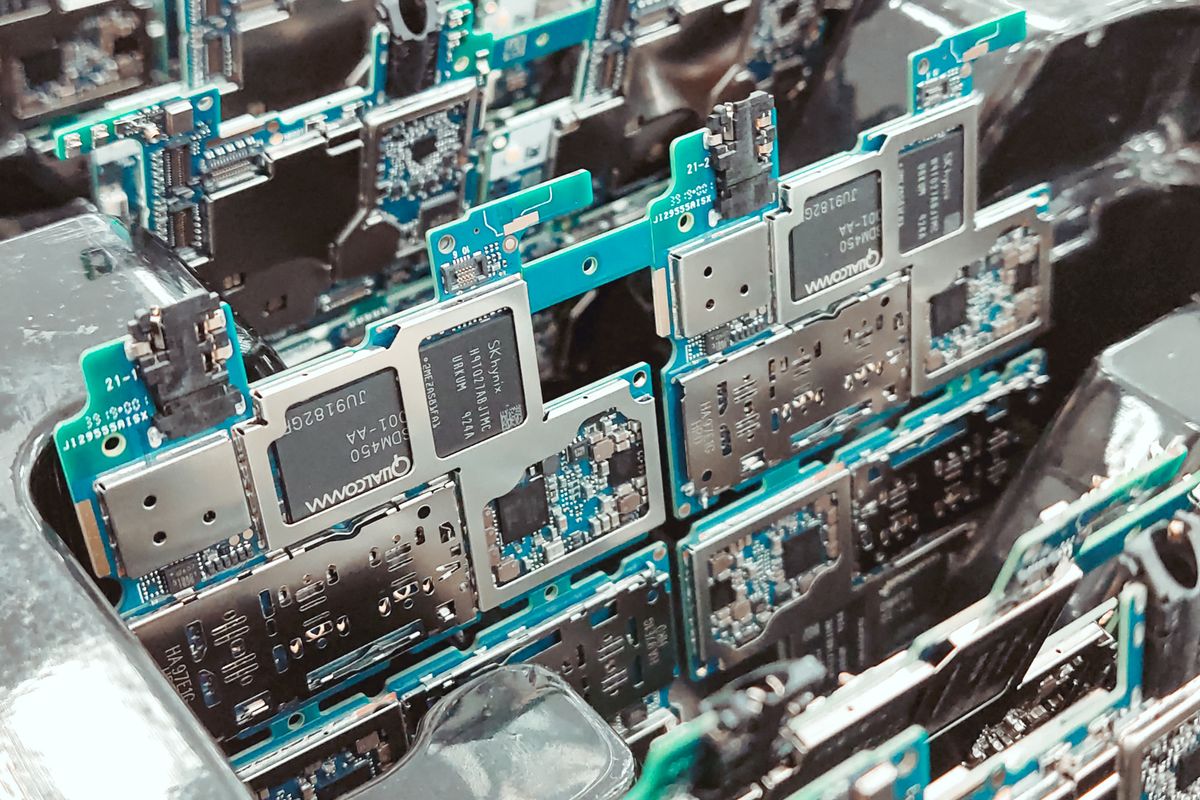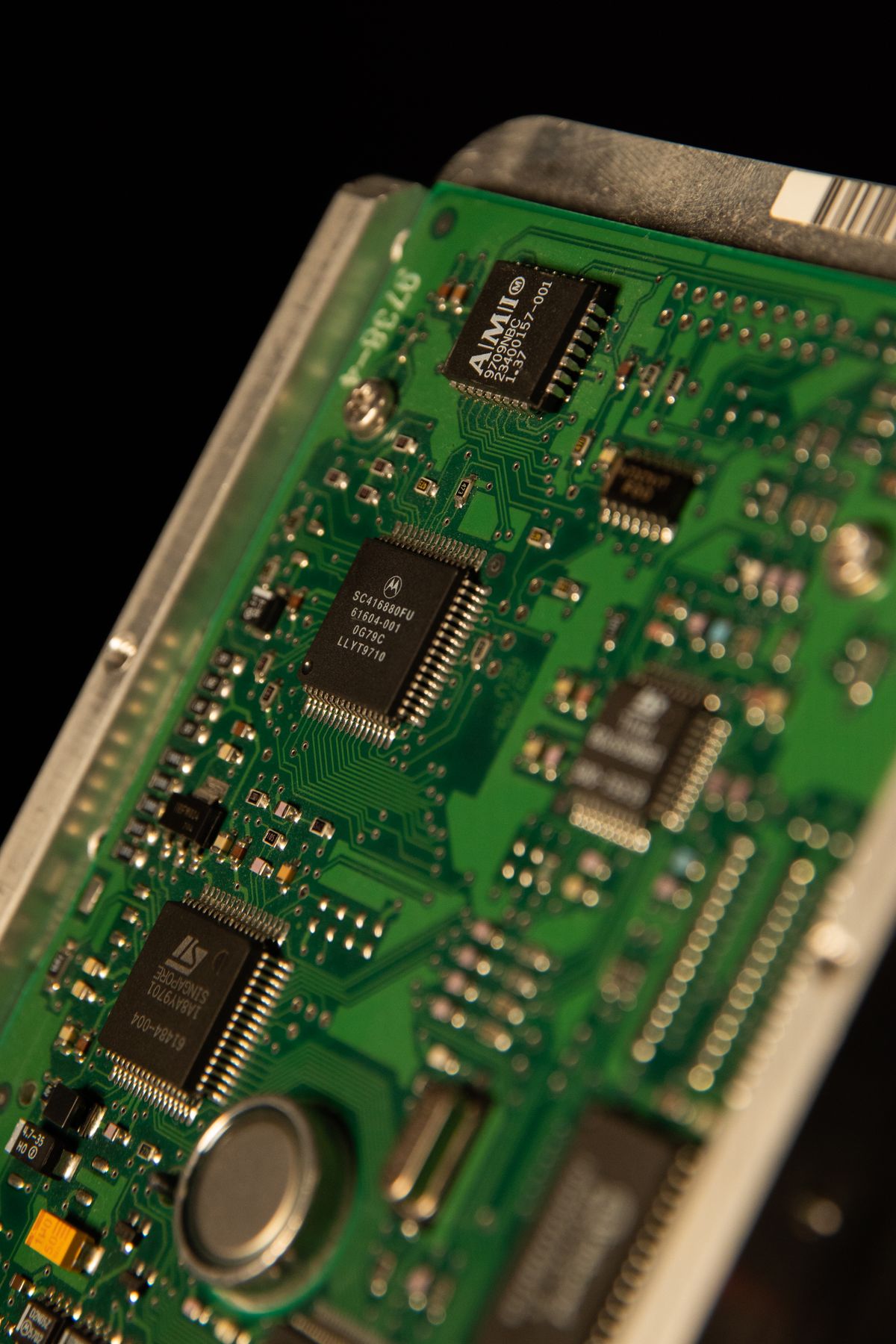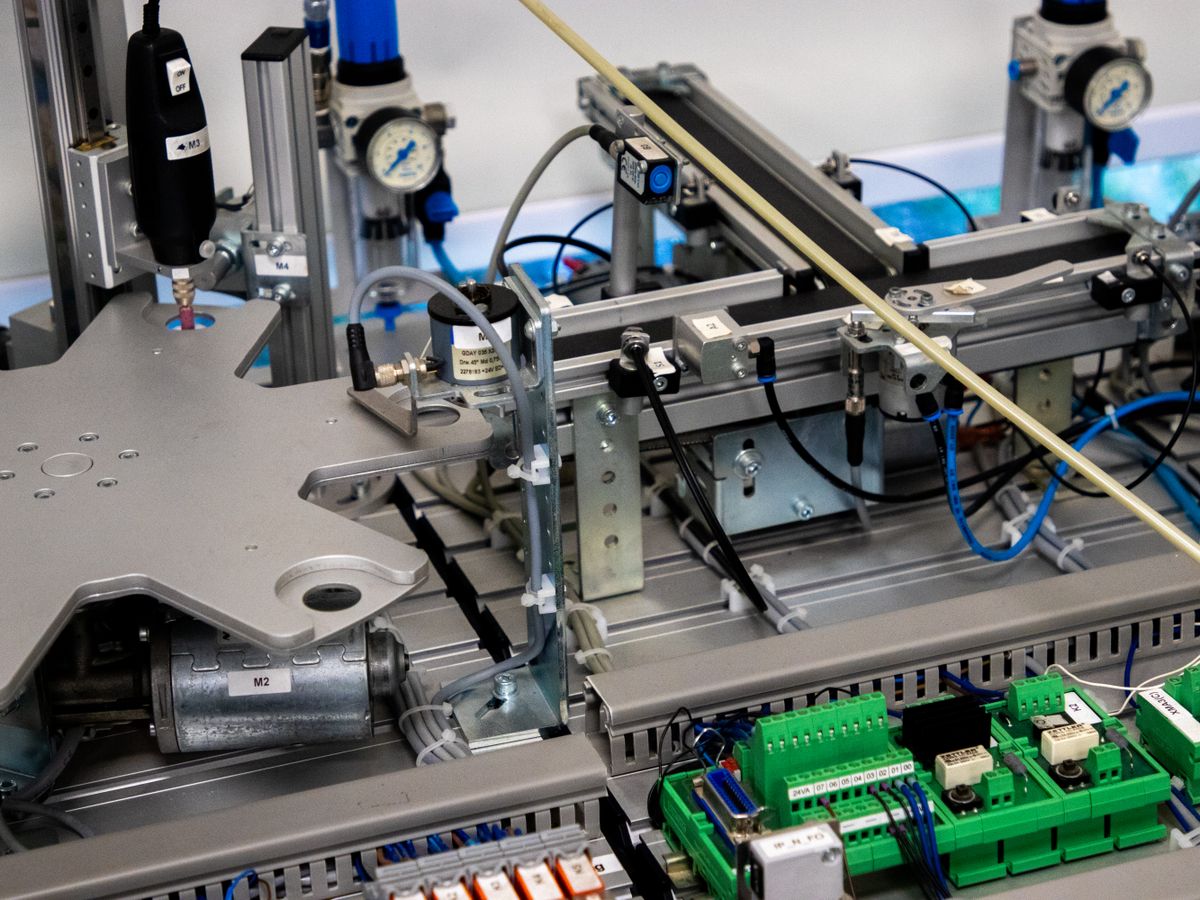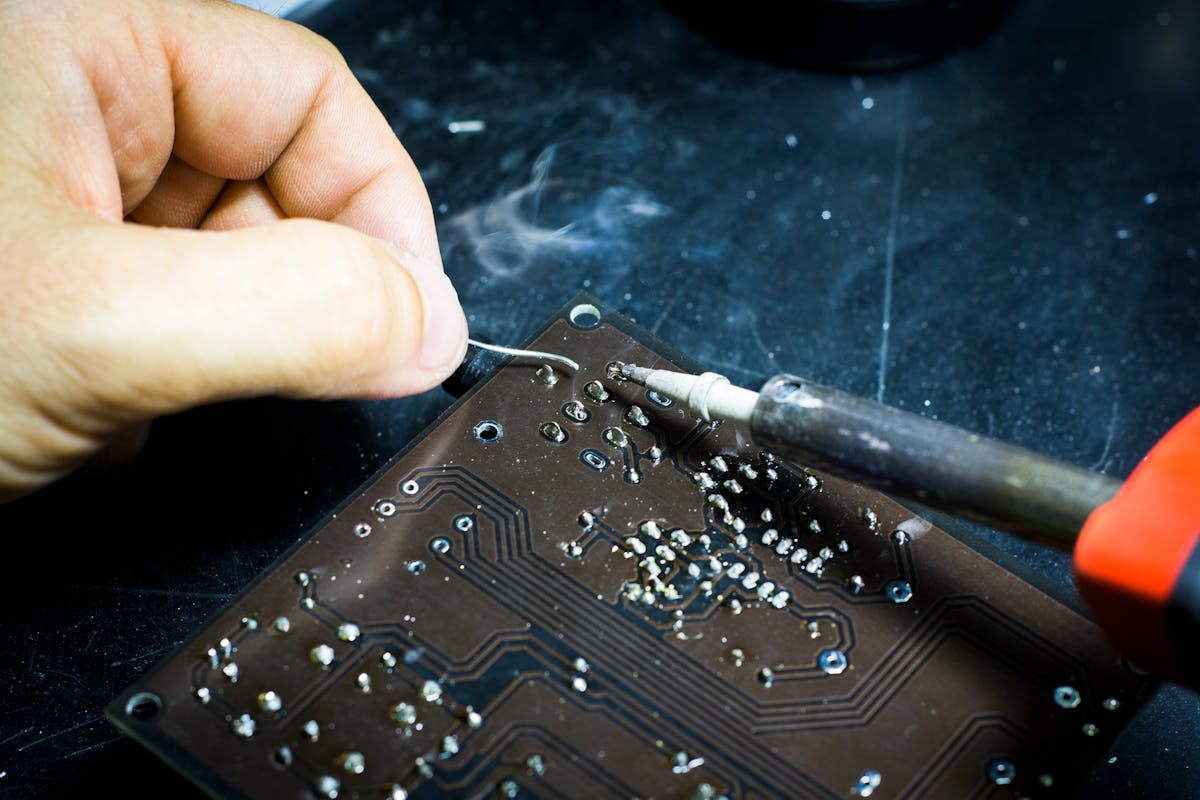
Electromechanical assembly combines circuit boards with the parts that move, switch, sense and connect: motors, solenoids, switches, sensors, wiring and mechanical housings, built into a single working assembly. It draws on mechanical and electrical skills together, and a supplier's strength in one does not guarantee the other. This guide sets out what to ask before you commit an assembly to anyone, with figures from the 161 UK electromechanical assembly suppliers listed on EMS Directory.
Look for real mechanical skill
Ask how the supplier runs mechanical assembly day to day: torque-controlled fastening with calibration records, documented work instructions for each assembly, and fixtures or jigs that keep results consistent from unit to unit. Ask who the mechanical assembly team are and what products they have built before. Experience with assemblies similar to yours is the most useful evidence.
Understand how wiring and cabling are handled
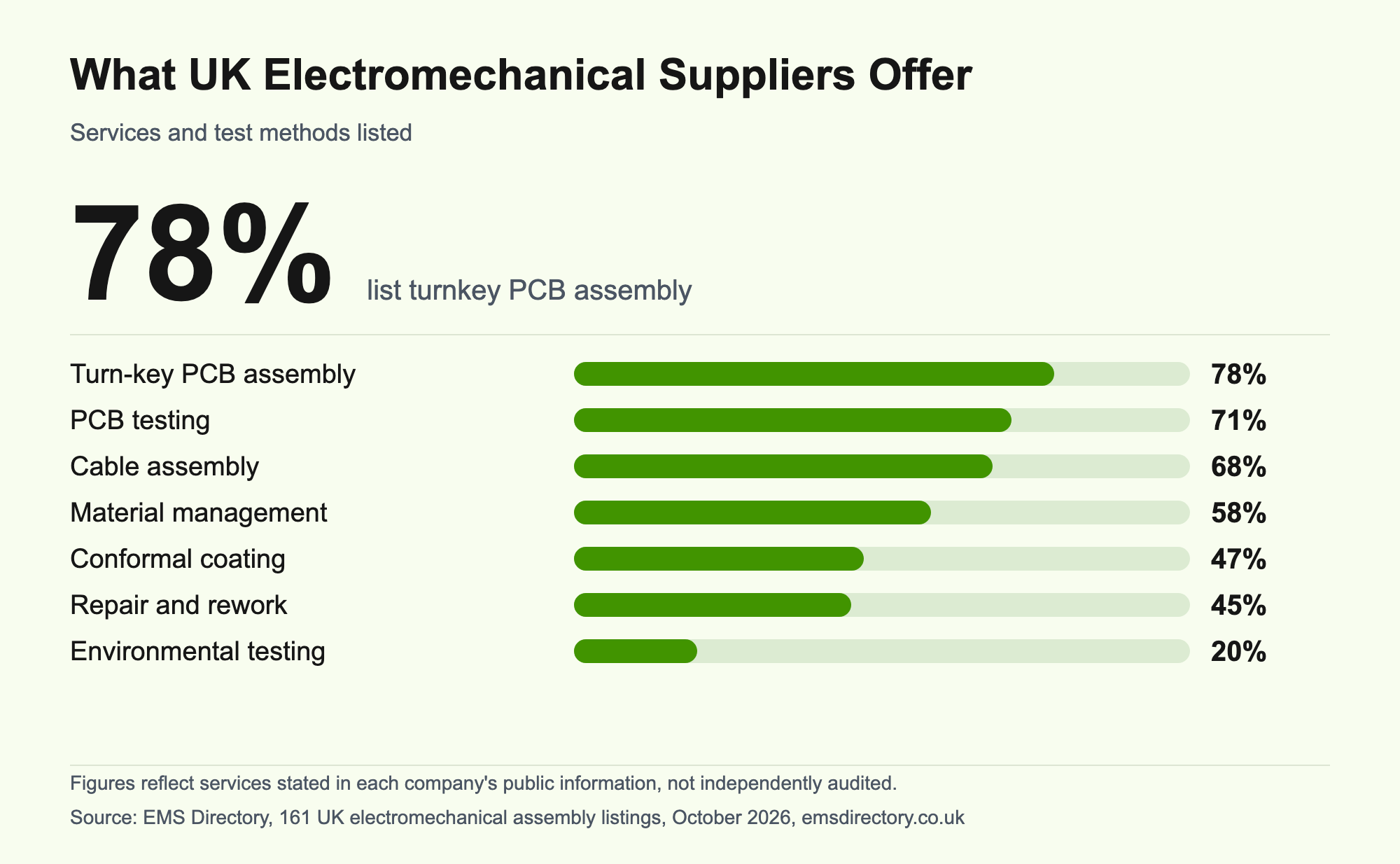
Most electromechanical assemblies include internal wiring, and the workmanship standard for cable and wire harness assemblies is IPC/WHMA-A-620, which is separate from IPC-A-610 for circuit boards. On EMS Directory, 68% of electromechanical assembly suppliers list cable assembly and 20% list IPC/WHMA-A-620. Ask which standard the supplier works to for wiring, how crimps and terminations are checked, and whether harnesses are built in-house or bought in.
Ask about environmental sealing
If the assembly will see moisture, vibration or chemical exposure, ask which sealing and protection methods the supplier runs in-house: gluing, bonding, potting or encapsulation. Of the suppliers listed, 47% list conformal coating and 20% list environmental testing. Potting and encapsulation are not tracked as a separate field, so ask each supplier directly. Some subcontract these steps, which adds a handover and a supplier to your chain, so it is worth knowing before you place an order.
Test the assembly as a whole
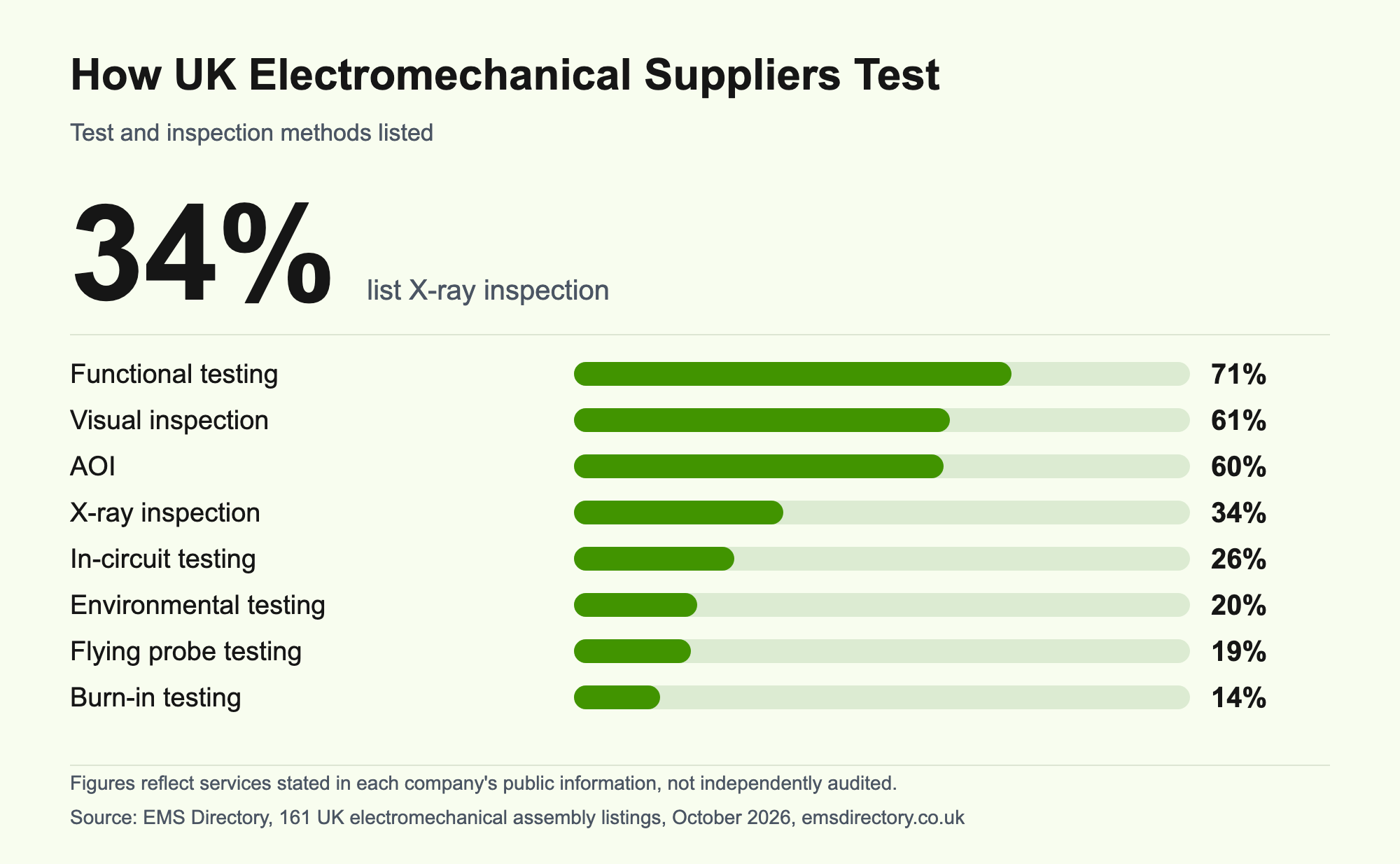
Electronics tested in isolation do not show how the finished mechanism behaves. On EMS Directory, 71% of electromechanical suppliers list functional testing, 60% AOI, 34% X-ray inspection, 26% in-circuit testing and 14% burn-in testing. Listings do not say how far functional testing goes, so ask whether the supplier tests the assembled product under realistic operating conditions: movement, load, cycling or run-in where your product needs it. Ask who designs and owns the test fixtures, and which test records you receive with each batch.
Ask about traceability for mechanical parts
Electronics suppliers are used to traceability for components on a board. Ask whether the same discipline applies to mechanical parts, so that a finished assembly can be traced to its parts and batches. For regulated sectors such as medical and aerospace this is often a requirement, so confirm it early. Of the suppliers listed, 66% serve medical customers and 65% aerospace and defence, and 16% list ISO 13485 and 16% AS9100.
Match the supplier to your volume
Of the UK electromechanical assembly suppliers listed, 89% list prototype orders, 87% low-volume work, 83% medium volume and 50% high volume. If your product will grow from prototype quantities to production, ask how the supplier handles that step and who owns the fixtures and tooling along the way.
Quick-reference checklist
- Ask about torque control, calibration records and work instructions
- Ask for examples of electromechanical assemblies similar to yours
- Confirm the workmanship standard used for wiring, and whether harnesses are built in-house
- Ask which sealing and protection steps run in-house and which are subcontracted
- Ask whether the whole assembly is tested under operating conditions, and which records you receive
- Confirm traceability for mechanical parts as well as electronic components
- Filter on the volume range you will need at both ends, prototype and production
Figures come from EMS Directory listings as of October 2026 and reflect what each company states in its public information. They are not independently audited.
Where to go for more
IPC publishes IPC-A-610 for electronic assemblies and IPC/WHMA-A-620 for cable and wire harness assemblies, and runs recognised training programmes for both. UKAS is the UK's national accreditation body, and a useful check on who issued a supplier's certificates.
Find electromechanical suppliers on EMS Directory
Browse UK electromechanical assembly suppliers and narrow them with the Certifications, Testing, Industries Supported and Order Type / Volume filters. Save the suppliers that fit to your shortlist, open the Compare view to see their certifications and capabilities side by side, and send one enquiry to your whole shortlist at once. Our certification and capability checklist covers the wider questions to ask any UK electronics manufacturer.
Figures and data in this article are drawn from EMS Directory's own dataset of UK electronics manufacturing listings, and may be cited with attribution to EMS Directory and a link to this article. For press enquiries or a custom data cut, contact ems@emsdirectory.co.uk.